They told us healing lives in painted white rooms.
Fluorescent lights.
Clipboards.
Diagnosis codes.
They told us trauma is an individual disorder.
A chemical imbalance.
A coping failure.
A symptom cluster.
But what if the wound
is older than the client?
What if the ache in the chest
is not just anxiety—
but an echo
from a grandmother who had her language taken?
What if the silence in a 16-year-old boy
is not resistance—
but inherited grief
from a grandfather who survived a boarding school
that tried to beat culture out of his bones?
Western medicine says,
“Tell me what’s wrong.”
Indigenous wisdom asks,
“Tell me what happened.”
Western healing says,
“We will treat the symptoms.”
Indigenous healing says,
“We will restore the circle.”
One measures progress in reduced behaviors.
The other measures progress in restored belonging.
And here we are —
clinicians, peers, helpers —
standing between two worlds.
One trained us to assess.
The other asks us to listen.
One taught us to diagnose.
The other invites us to witness.
The Western model is not the enemy.
It has tools.
Research.
Structure.
But structure without story
can become sterile.
Research without remembrance
can become harm.
Because trauma did not begin in the DSM.
It began in removal.
In broken treaties.
In land stolen and songs silenced.
And if trauma traveled through generations without consent,
then healing must travel back
with intention.
What if therapy included the land?
What if treatment plans included ancestors?
What if sobriety was not just abstinence—
but reclamation?
Reclamation of language.
Reclamation of ceremony.
Reclamation of identity.
Western healing can stabilize the nervous system.
Indigenous healing can restore the spirit.
And maybe…
just maybe…
the future asks us not to choose one or the other.
But to braid them together.
Clinical skill
with cultural humility.
Evidence-based practice
with earth-based wisdom.
Safety
with sovereignty.
Because we are not here
to rescue Native communities.
We are here
to stop repeating harm.
We are here
to remember that mistrust is wisdom
when history has not been safe.
We are here
to understand that addiction might be grief
without ceremony.
We are here
to restore the circle.
For the youth sitting in front of us.
For the grandparents behind them.
For the seven generations ahead.
The wound may be historical.
But the healing can be intentional.
And it can begin
with how we show up.
About Me
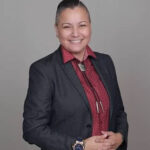
Kristina Padilla, MA, LAADC, ICAADC, CGS, is a leader with the California Consortium of Addiction Programs and Professionals (CCAPP), where she serves as the vice president of strategic development and vice president of education, overseeing CCAPP’s education department. Mx. Padilla has a BS in criminal justice administration and a MA in counseling psychology with an emphasis on marriage and family therapy. She is on the board of directors of the National Association of Lesbian, Gay, Bisexual, Transgender Addiction Professionals and their Allies (NALGAP), where she is the vice president and the California representative. Mx. Padilla identifies as a trans, gender-fluid, two-spirit, nonbinary, biologically born woman. Her pronouns are she/her and they/them, and she goes by the suffix of Mx. Padilla.