






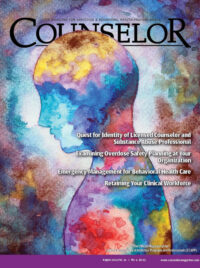
Are You Training Your Staff for Their Next Job? Retaining Your Clinical Workforce
There is an obvious staffing problem in the substance use disorder industry. How can you retain your employees and what makes someone leave?

Forensic Evaluators: Their History and Their Role in the Industry
Forensic mental health evaluation offers a viable career path with financial benefits that are independent of third-party reimbursement and HMO restrictions.

Overdose Safety Planning: A New Approach to the Opioid Epidemic
Opioid research should keep up with trends to evaluate how overdose safety planning functions, as well as forging partnerships across industries.
Column, Letter from the Publisher
Evolving Addiction Treatment: Terminology and Policy Changes
In recent years, the field of addiction treatment has undergone significant transformations, particularly regarding terminology and federal policies governing medication dispensing. These changes aim to reduce stigma, enhance patient access, and improve treatment outcomes for individuals battling substance use disorders. Traditionally, the term “medication-assisted treatment” (MAT) has been used to describe the integration of medications [...]
CCAPP, Column
Introduction For more than three decades, the 12 Core Functions have provided the backbone of professional alcohol and drug counseling. From screening to consultation, these functions define the what of a counselor’s work—the fundamental tasks we must perform competently to help clients recover.
Column, Recovery Capital & Peer Support
Creating Inclusive Recovery Cities
What is the background and foundations to the Inclusive Recovery Cities model? Recovery is a global phenomenon, but it is very clear that while there are common features to what recovery looks like in different parts of the world, there are also notable differences in how recovery grows and spreads. The theory behind that is [...]
Column, Industry Insider
Securing Patient Data: Best Practices for Behavioral Health and Addiction Treatment Professionals
The behavioral health and addiction treatment industries handle some of the most sensitive and valuable patient data in all of health care. And yet many professionals continue to rely on outdated, insecure communication tools that put both patients and practices at risk of a cyber attack. As these threats escalate and as health care data [...]
Column, Counselor Concerns
The Pervasive Myth of the Evidence-Based Practice
The 35th president of the United States, John F. Kennedy, once said that “The great enemy of truth is very often not the lie—deliberate, contrived and dishonest—but the myth—persistent, persuasive and unrealistic” (Kennedy, 1962). We have seen myths—the persistent, persuasive, and unrealistic—play out all too often in our field of practice, including the following, to [...]
Column, National LGBTQIA2+ Rainbow Coalition (NLRC)
Mental health constitutes a pivotal component of overall well-being, impacting every individual regardless of their sexual orientation or gender identity. Nevertheless, members of the LGBTQ+ community frequently confront distinct mental health challenges stemming from societal prejudice, discrimination, and the pursuit of acceptance in many cultures.
Column, Topics in Behavioral Health Care
Navigating Medical, Health Plan, Social Service, and Other Systems
Our two previous articles discussed caregiving as a public health problem; types, recipients, and challenges of caregiving; and the effects of caregiving on the health and functioning of caregivers. This article focuses on navigating multiple systems, organizations, or businesses involved with a person who needs caregiving. We also discuss end-of-life issues as some caregiving recipients [...]
Column, Wellness
When Darkness Becomes Light and Light Becomes Darkness
Oriental medical practitioners like me use the concept of ‘opposite interdependent energies’ to explain and highlight the necessity of balance in the body and in the environment. We call these energies yin and yang (pronounced YAWNG).
Featured Article
Are You Training Your Staff for Their Next Job? Retaining Your Clinical Workforce
It would come as no surprise to anyone working in the substance use disorder (SUD) prevention/treatment and recovery industry that there is an obvious staffing problem that so many providers struggle with. Agencies have faced this crisis since before the pandemic, and Christine Vestal of the Pew Charitable Trust (2015), identified the number of SUD [...]
Featured Article
Forensic Evaluators: Their History and Their Role in the Industry
Psychological forensic evaluations have historically been dominated by psychiatrists and psychologists, with credentialing bodies specifically designed to serve these professionals by providing the necessary training and certification. As a result, over 200,000 licensed mental health counselors, marriage and family therapists, licensed clinical social workers, and substance abuse professionals in the United States have largely been [...]
Featured Article
Overdose Safety Planning: A New Approach to the Opioid Epidemic
Defining the Problem Since the increase in prescription opioid supply in the 1990s, the United States has grappled with a staggering rise in opioid-related overdose deaths. In 2022, there were 107,941 fatal overdoses, 82% of which involved at least one opioid (National Institute on Drug Abuse [NIDA], 2024). Trends from recent years indicate there has [...]
Featured Article
Emergency Management for Behavioral Health Care Professionals, Teams, and Organizations
An emergency management plan for behavioral health organizations is a written set of instructions that outline what the workforce at any workplace should do in an emergency.
About Me

Larry Hearn is a seasoned SUD counselor, licensed Religious Science Practitioner, and a committed advocate for healing and personal transformation. Armed with a Social Model Studies Certificate from the CCAPP Academy (formerly known as the CAARR Institute), education from Modesto Junior College, and certification from CCAPP, Larry boasts a robust 24-year background in addiction counseling. As a member of the California Coalition of Certifying Organizations (CCCO), he played an active role in shaping the California Code of Ethics and Sanctions Matrix.
Larry currently serves as Supervising Editor for Counselor Magazine and Media & Infrastructure Manager for the California Consortium of Addiction Programs and Professionals (CCAPP), where he combines his clinical insight with media and educational strategy to uplift the profession and support the workforce.
His passion extends to facilitating treatment and education groups, grief circles, and individual counseling, creating a secure and supportive environment for individuals to navigate recovery, grief, and emotional trauma. He enjoys training and mentoring SUD counselors. In his capacity as a licensed Religious Science Practitioner, he seamlessly integrates therapeutic and spiritual modalities, guiding individuals on a journey toward enduring recovery and inner peace. Beyond addiction counseling, Larry underscores the significance of grief healing and personal growth in his compassionate approach.

Current Issue
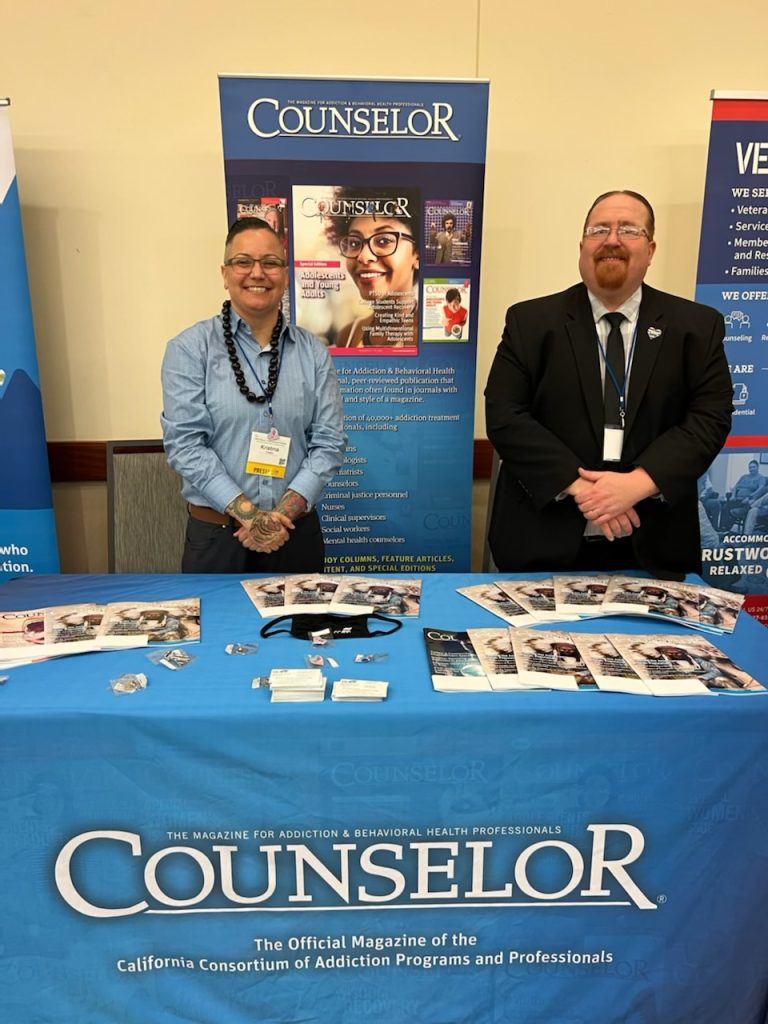

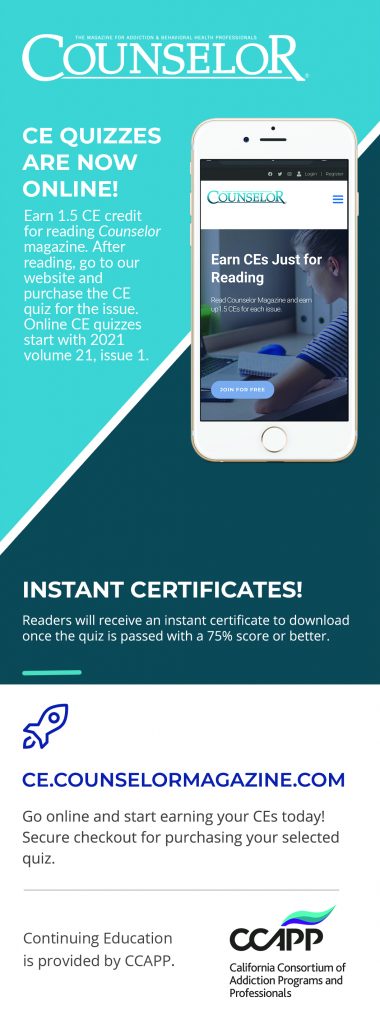
 Counselor Magazine is the official publication of the California Association of Addiction Programs and Professionals (CCAPP). Counselor offers online continuing education, article archives, subscription deals, and article submission guidelines. It has been serving the addiction field for more than thirty years.
For more information on CCAPP’s many programs, certifications, and career paths, please visit ccapp.us.